Crenza
Bucharest, 2026 — Process Documentation · Ref. OR-M01

Mapping the Seasonal Food Cycle

The Crenza practice follows a documented consultation sequence. Each stage is numbered, revision-stamped, and archived. The process runs from an opening intake record through a full seasonal food map to a structured quarterly follow-up — with verification at each step.

Process index
01Intake Assessment
02Seasonal Mapping
03Composition Planning
04Activity Integration
05Mid-Point Revision
06Quarterly Archive
Intake Review ── Seasonal Mapping ── Revision Control ── Batch Verification ── Archive Entry ── Traceability ── Activity Log ── Intake Review ── Seasonal Mapping ── Revision Control ── Batch Verification ── Archive Entry ── Traceability ── Activity Log ──
01 — Process sequence

Six stages, every consultation

01

Intake Assessment

Every consultation opens with a structured intake assessment. The session — 90 minutes in duration — covers the client's current food habits, daily meal patterns, and existing relationship with vegetables, fruits, grains, and proteins. No prior documentation is required from the client; the assessment begins from observation.

Bucharest, 2026 — intake records are filed under a unique consultation reference on the same day. Revision 01 of the client record is opened and archived immediately after the session closes.

A nutrition specialist taking detailed notes during an intake assessment session at a clean wooden desk with natural light, Bucharest studio
Stage 01 — Intake Assessment · Rev. 01 opened
02

Seasonal Food Mapping

Using Bucharest regional harvest calendars, a seasonal food map is drawn for the current quarter. This map identifies which vegetables and fruits are at peak availability, which grains are in season from domestic suppliers, and how the macronutrient composition of the weekly shop shifts as the season progresses.

The map is cross-referenced against the intake record. Where the client's current food choices diverge significantly from seasonal availability, the map notes alternative selections — without prescribing a rigid plan.
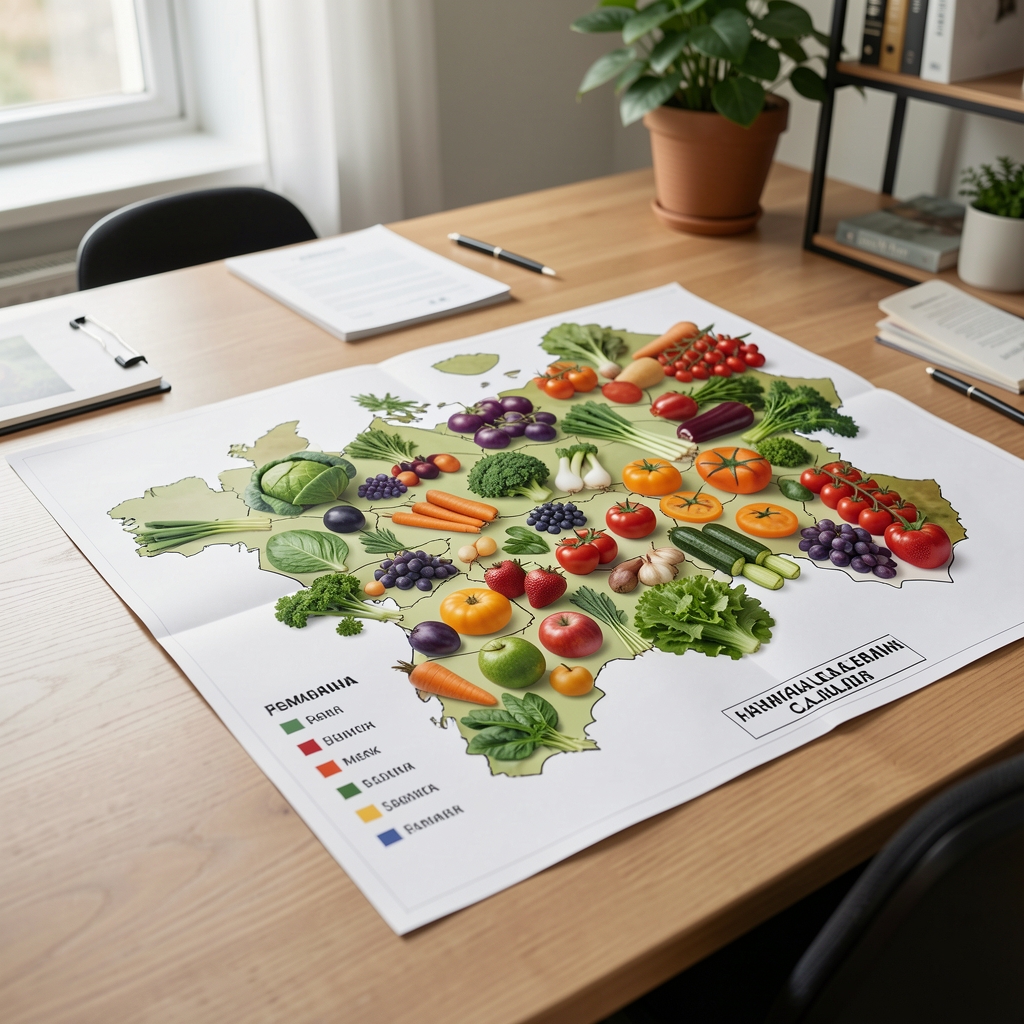
A seasonal produce map spread across a consultation table showing regional Romanian harvest calendar with vegetables and fruits marked by month
Stage 02 — Seasonal Map · Bucharest harvest calendar
03

Composition Planning

A seven-day food composition plan is drawn from the seasonal map and intake record. The plan is structured around three food categories per meal slot — a primary vegetable or fruit, a grain or legume, and a protein source. Quantities are recorded in natural portions, not weighed grams, to reflect real household preparation.

The composition plan is filed as Revision 02 of the client record. It is a living document: if the weekly shop changes due to market availability, the plan is updated and archived under a new revision number.

Sample composition log — Revision 02
Monday Brassica · Lentil · Egg
Wednesday Root veg · Rye · Poultry
Friday Leafy green · Quinoa · Fish
Sunday Stone fruit · Oat · Legume
Archived: Rev. 02 — week of intake
04

Activity Integration

Where the client maintains a regular sport or exercise routine, the composition plan is adjusted to reflect weekly energy output. Activity sessions are logged by type and approximate duration — running, cycling, swimming, strength work — and mapped against food-group weighting in the plan.

The integration does not target a specific energy surplus or deficit figure. It observes the relationship between movement and food pattern over four weeks, and documents how that relationship shifts across the season. The observation is the record.

An open activity log notebook showing handwritten weekly exercise entries alongside a food composition chart on a light wooden surface
Stage 04 — Activity log · weekly documentation
05

Mid-Point Revision

At week four of the consultation programme, a mid-point revision session is conducted. The composition plan is reviewed against the client's reported food patterns over the preceding weeks. Where the plan has been followed closely, the revision notes compliance and projects forward to the seasonal shift. Where the plan diverged, the revision documents the divergence — not as a failure, but as data.

Revision 03 of the client record is opened at this session. It carries forward the composition plan with amendments, an updated activity log cross-reference, and a note on any seasonal changes to the Bucharest harvest calendar that fall within the next eight weeks.

06

Quarterly Archive

At the close of the quarter, all revisions of the client record are compiled into a single archive entry. The entry includes the intake record, all composition plan revisions, the activity log summary, and a note on seasonal food availability changes observed during the period.

The archive entry is dated, stamped with a revision count, and filed. It serves as the baseline document for the following quarter's consultation — if the client continues — or as a standalone record of the dietary guidance period.
Archive entry — Q1 2026
Intake record Rev. 01 · filed
Composition plan Rev. 02–04 · filed
Activity log 12 weeks · filed
Seasonal notes Spring → Summer
Archive stamped — March 2026 · Rev. count: 4
02 — Practice standards

How the record is kept

Every document produced during the Crenza consultation process — from the initial intake record through to the quarterly archive — is maintained under a consistent filing standard. Revision numbers are sequential. Dates are recorded in full. No document is overwritten; amendments are filed as new revisions, preserving the complete sequence.

This approach reflects a simple principle: the history of a food practice is as informative as its current state. A client returning after six months carries a record that shows not just where their food habits stand today, but how they moved across two seasons.

STD–01

Sequential revision numbering

All records are numbered Rev. 01, 02, 03 in order. No revision is skipped, deleted, or overwritten. Each carries a date stamp.

STD–02

Seasonal harvest cross-reference

Each composition plan is cross-referenced against the Bucharest regional harvest calendar for the current quarter. Seasonal shifts are documented in revision notes.

STD–03

Activity log chain-of-custody

Activity entries are logged by the specialist following each check-in. They are not self-reported without verification. Each entry notes the session type and week number.

STD–04

Quarterly archive compilation

At quarter-close, all revisions are compiled into a single archive entry. The entry is complete and self-contained — it does not reference external documents not filed within it.

STD–05

Food group traceability

Every food group entry in the composition plan is traceable to its seasonal source category — domestic, regional, or imported. Import notes are flagged for client awareness.

STD–06

Independent follow-up protocol

The mid-point revision and quarterly archive sessions are scheduled independently of the client's progress. They occur at fixed points in the programme regardless of reported adherence to the plan.

03 — Sourcing context

Where the food map begins

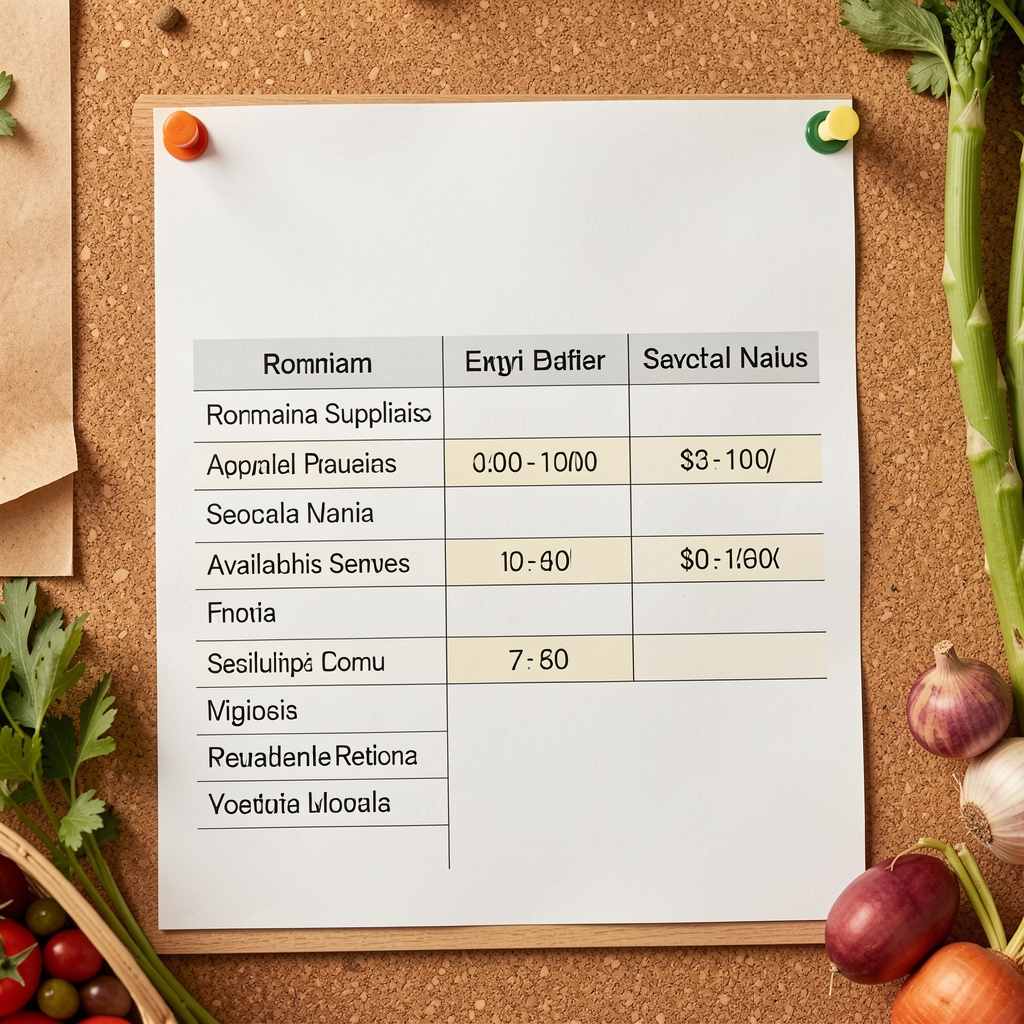
The seasonal food map used in Crenza consultations draws from documented regional sourcing categories: Bucharest central market, outer-sector weekly markets, and domestic wholesale suppliers active in the Muntenia region. Import categories are noted separately and flagged in the composition plan as non-seasonal where applicable.

The map is updated quarterly. When a supplier category changes — a local market closes, a seasonal crop fails, a new regional supplier enters the Bucharest network — the update is logged as a sourcing revision and carried into the next consultation batch.

A close-up view of a fresh vegetable sourcing chart on a corkboard, showing regional Romanian supplier names, seasonal availability windows, and produce categories
Sourcing map — Muntenia region, Q1 2026 · documented
04 — Verification

Each record independently reviewed

At the close of each quarterly archive, a peer review of the record sequence is conducted by a second qualified nutrition professional. The reviewer checks for revision numbering consistency, seasonal cross-reference accuracy, and activity log completeness. The review outcome is noted in the archive entry.

This independent review step was introduced into the Crenza practice in 2023. It adds one working day to the archive process. The outcome — consistent records, independently verified — is the practice's quality standard.

Yearly reviews
100%
Records reviewed
6+
Revision checks per archive
2023
Peer review introduced
05 — Common questions

About the process

A selection of questions received from clients and prospective clients about the Crenza consultation methodology. Documented and archived — revision 01, 2026.

The initial intake assessment is 90 minutes. This covers the full intake record, seasonal food map orientation, and the opening of Revision 01. Follow-up sessions are 45–60 minutes. The mid-point revision at week four typically runs 60 minutes.

No prior documentation is required. The intake assessment begins from conversation and observation. If you have an existing food diary or activity log from the preceding two weeks, bringing it is useful — but not mandatory.

The map covers the Bucharest regional harvest calendar for the current quarter. It documents which vegetables, fruits, and grains are at peak availability from domestic and Muntenia-region suppliers. Imported produce categories are noted separately.

No. The composition plan is a documented food-category framework — it records which food groups should be present at which meal slots, and in what rough proportion. It is not a menu with specific recipes or fixed quantities. Divergences are noted in revision records, not penalised.

Yes. At the quarterly archive close, a new programme can be opened for the following season. The archive from the completed quarter serves as the intake baseline for the new period — no full re-assessment is required. The seasonal food map is updated to reflect the new quarter.

The quarterly archive review is conducted by a qualified nutrition professional external to the Crenza practice. The reviewer's role is limited to verifying the internal consistency of the record — revision numbering, seasonal cross-reference accuracy, and activity log completeness. The reviewer does not modify or amend the record.

06 — Begin the record

The consultation schedule is open for the current season.

Bucharest, 2026 — intake reviews are booked by appointment, Monday through Friday, 09:00–18:00. Contact the practice directly to confirm availability and open Revision 01 of your record.